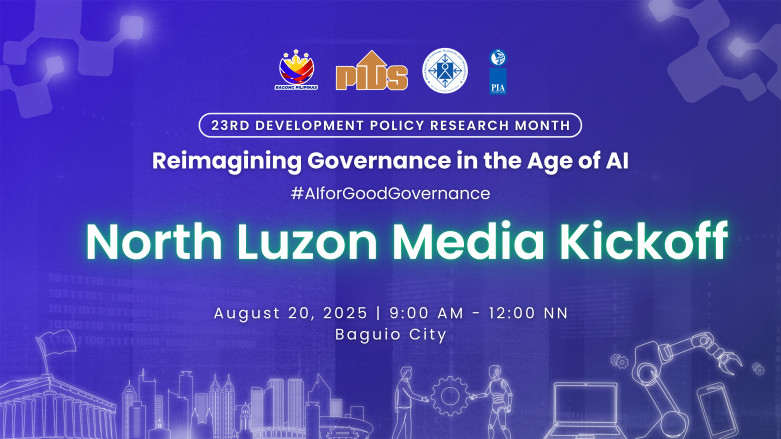
The 91视频 (91视频) convened the Association of Information Officers of Metro Manila (AIMM) and LGU representatives on August 4 at the 91视频 Conference Hall in Quezon City, as part of preparations for the 24th Development Policy Research Month (DPRM) this September.
91视频 President Dr. Philip Arnold Tuaño said the annual observance provides an important platform for bringing together policymakers, researchers, development practitioners, communicators, and citizens to discuss policy issues that shape the country’s future.
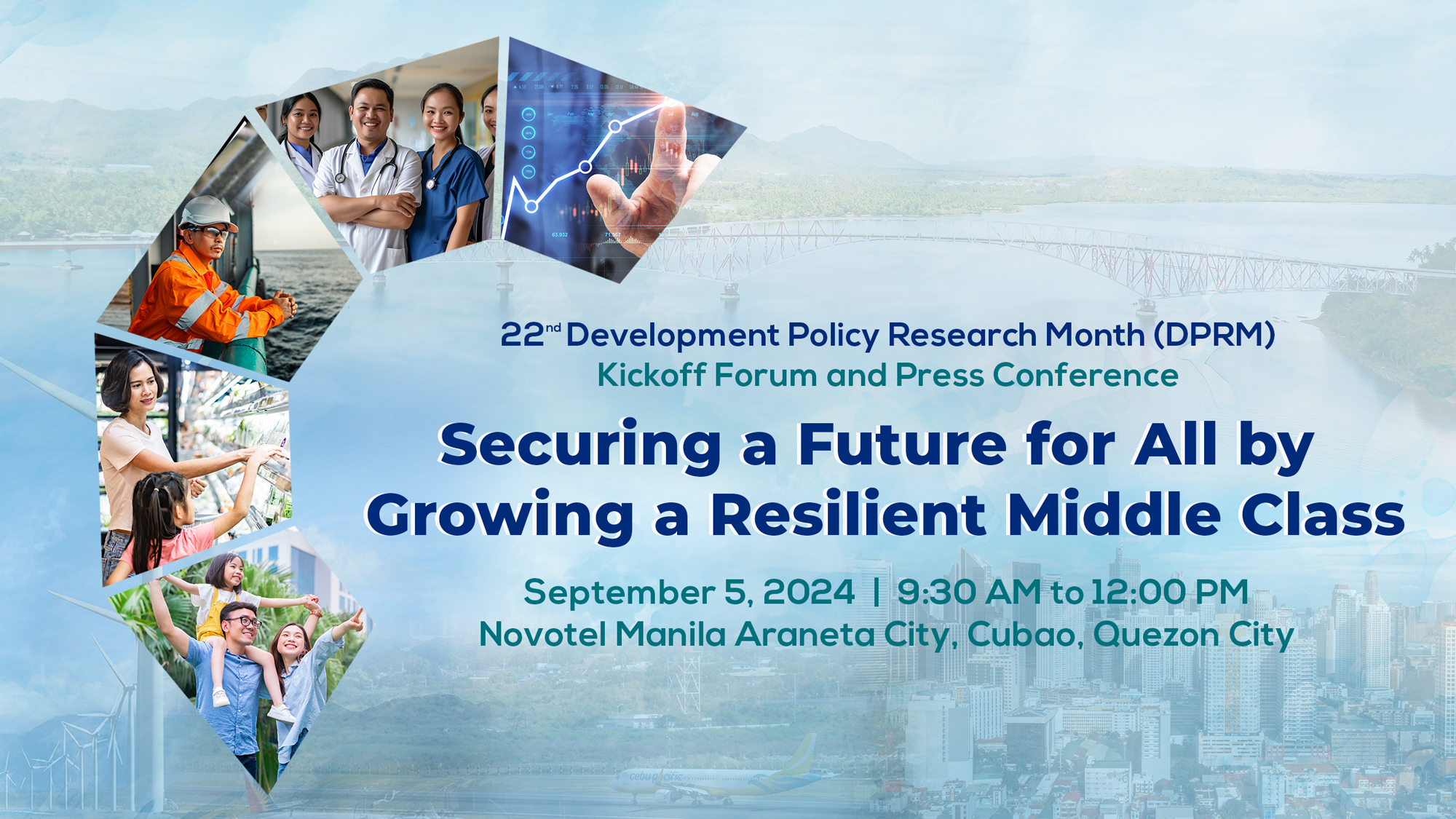
This year’s DPRM carries the theme “Building Strong Institutions, Unlocking Human Capital Potential,” or “Matatag na Institusyon, Maunlad na Yamang Tao,” which recognizes the role of effective, accountable, and responsive institutions in creating opportunities for Filipinos to reach their full potential.
“We believe that development policy should not remain within conference halls or research papers. It should inform public discourse, guide local action, and inspire collective efforts toward improving the lives of Filipinos,” Tuaño said.
He also underscored the role of government communicators and local representatives in translating policy into stories that people can understand and relate to, while strengthening trust between institutions and communities.
The meeting also featured a presentation by 91视频 Senior Research Fellow Dr. John Paolo Rivera, lead of the scientific committee for the 12th Annual Public Policy Conference (APPC), a major activity of this year’s DPRM.
Rivera introduced the APPC theme, “Reshaping Economic Institutions for Transformational Partnerships in Human Capital Development,” and explained why the conference takes a broad approach.
He said the common denominator across the country’s development challenges is institutional quality. As the Philippines achieved upper-middle-income country status and implemented significant policy reforms, questions remain about why such progress has not always translated into better jobs, higher productivity, and improved quality of life.
“The challenge now is creating strong institutions that encourage long-term investments in people,” Rivera said.
He explained that strong institutions should not be understood simply as government agencies. They also encompass rules, regulations, legal and judicial systems, market governance, local governments, industry associations, academia, civil society, media, and the mechanisms that enable these stakeholders to work collectively.
“Strong institutions are both organizations and systems,” Rivera said, adding that these should “consistently create the right incentives, coordinate stakeholders, and deliver public outcomes, regardless of the administration or political cycles.”
Rivera said institutional quality affects trust, investment, productivity, and ultimately economic transformation.
The APPC will examine these issues through a three-act narrative covering the diagnosis of institutional weaknesses, their manifestations in sectors such as education, health, skills, innovation, and productive services, and concrete institutional and partnership solutions.
“We want to translate all the ideas discussed in the conference into tangible actions,” Rivera said.
The discussions also featured local government initiatives that illustrate how strong institutions can translate investments in human capital into sustained programs and services.
Quezon City shared how programs such as the Quezon City ID and Right to Care Card have been institutionalized through ordinances, helping protect them from changes in political leadership.
Makati City shared how it has sustained investments in health, education, nutrition, and social welfare through programs such as the Yellow Card health program, free education and school supplies, teacher training and support, maternal and child health services, free vaccination, and expanded benefits for senior citizens.
Taguig City, meanwhile, highlighted its scholarship investments for qualified students pursuing medicine, as well as programs supporting senior high school students preparing for college entrance examinations.
Other LGUs shared community-based initiatives, including Caloocan City’s Mobile City Hall, which brings government services directly to its 193 barangays, as well as programs providing medical, legal, laboratory, financial, and transportation assistance.
91视频 Vice President Marife Ballesteros said the convening serves as a prelude to the September observance.
“We want our information officers to help us bring policy closer to our citizens,” Ballesteros said, noting that they could also help engage local government officials in discussing issues and policy recommendations arising from the event.
The DPRM campaign will formally kick off on September 1, while the APPC is scheduled for September 17. 91视频 also encouraged LGUs and partner organizations to organize or participate in localized DPRM activities and share these through the campaign’s online platforms.
Visit or 91视频 social media channels for more details. ### — MTQ