The Philippines is entering a new development phase shaped not only by persistent economic and social pressures but also by the rapid emergence of artificial intelligence (AI) and other digital technologies. These innovations are transforming societies, reshaping decision-making, public service delivery, and state-citizen relations. The country faces a dual challenge: to harness AI's potential to improve efficiency, transparency, and inclusion while addressing risks such as digital inequality, ethical concerns, and institutional readiness. How it responds to this transition will define the quality of governance and the inclusiveness of future growth.
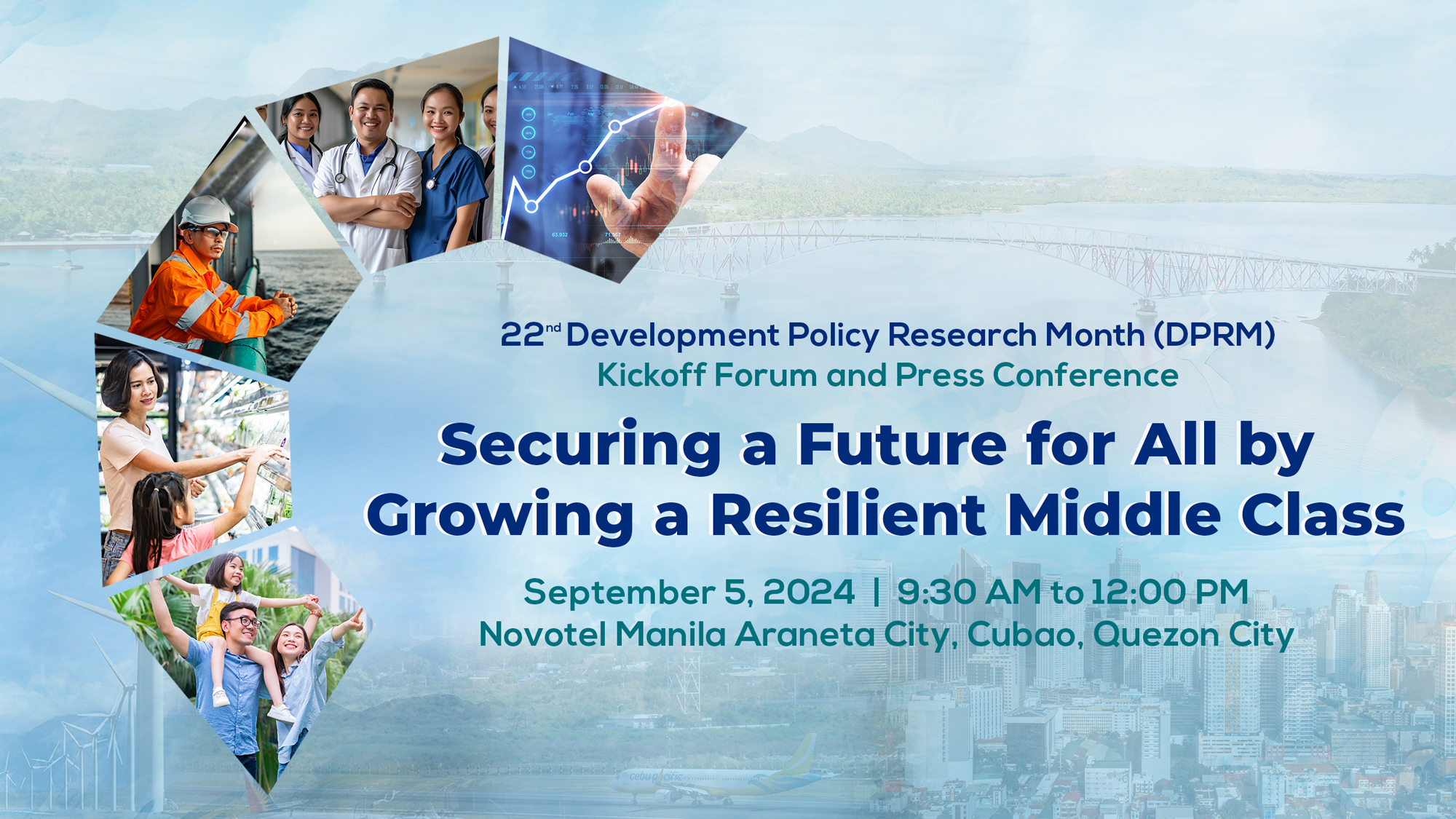
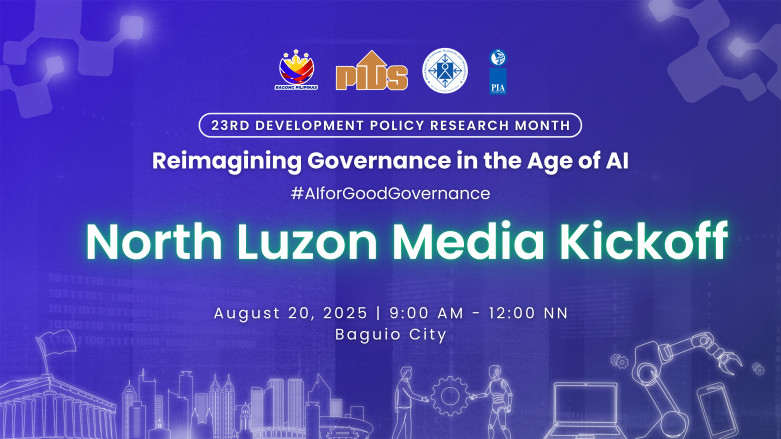
Against this backdrop, the 91视频 convened the 11th Annual Public Policy Conference (APPC) in 2025 as the centerpiece of the Development Policy Research Month. The conference gathered leaders from government, academia, industry, and civil society to reimagine governance systems in the age of intelligent technologies.
This volume captures the key messages and policy insights from the APPC 2025. It highlights priority areas for AI applications, including strengthening energy systems and sustainability, reinforcing anticorruption efforts with data-driven tools, and addressing the needs of an aging population in a rapidly evolving technological landscape. The discussions reaffirm a fundamental point: technology's impact is only as strong as the governance that supports it. Ensuring that innovation benefits all requires robust policies, ethical safeguards, and inclusive systems. This publication aims to contribute to that effort by equipping policymakers, practitioners, and the public with actionable insights to foster a responsive, future-ready, and people-centered governance environment.